Clumsy Execution: "Baseball Diplomacy" Draws More Disputes Than Applause
The Storm Media Commentary, March 10, 2026
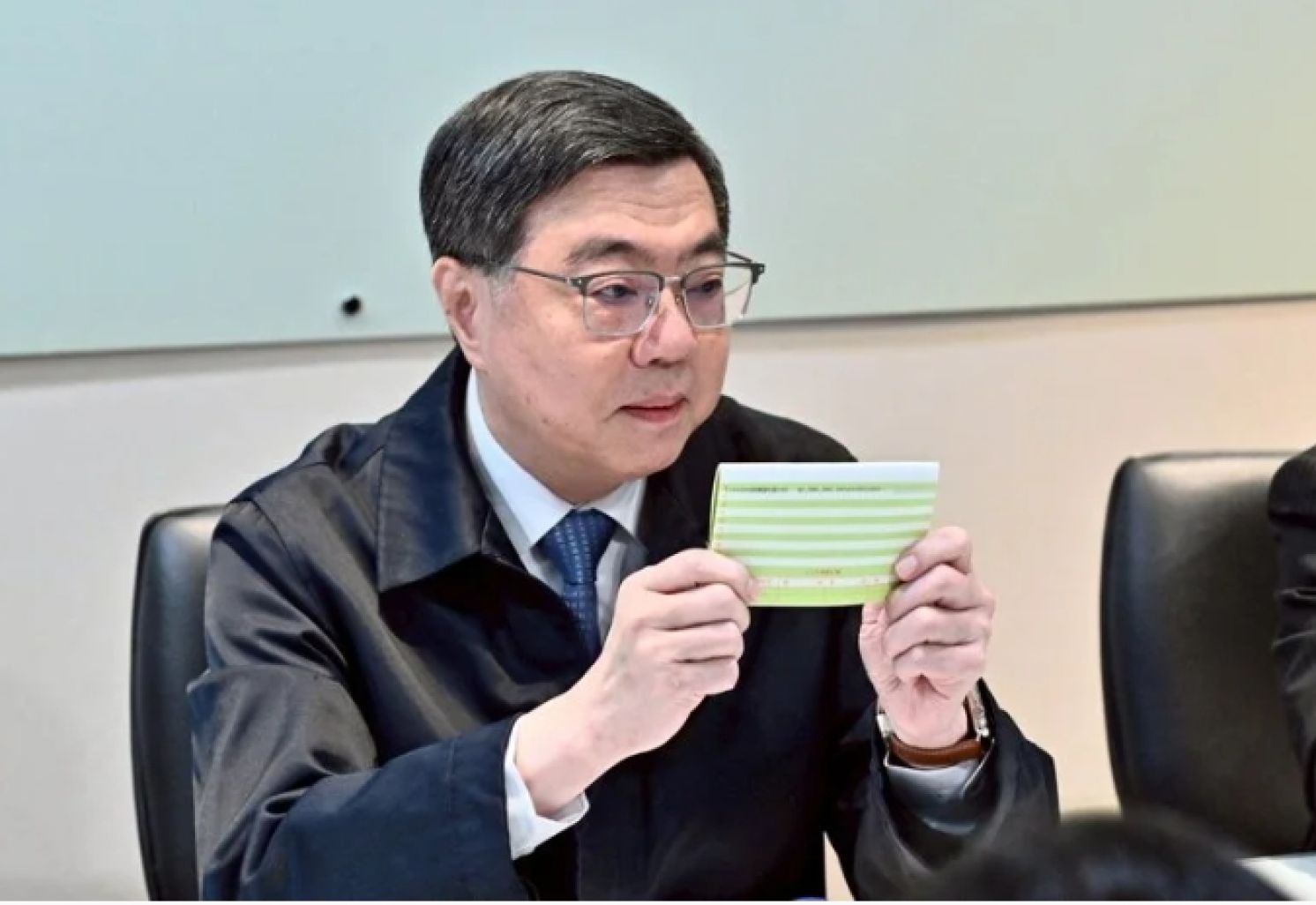
Chinese Taipei stopped in the WBC preliminary round. However, the controversy over Premier Cho Jung-tai’s brief appearance in Tokyo to watch the game in person has continued to burn for more than 48 hours, with an apparent determination not to let the matter rest until they see his “self-paid receipts.” A perfectly good ballgame turned into a joke when Premier Cho watched it, and it also turned into political mudslinging.
Premier Cho’s trip to Tokyo, even if it was only a few hours of a “flash visit,” could still be described as a “diplomatic breakthrough.” After all, since Taiwan and Japan severed diplomatic relations, very few of our high-ranking officials have visited Japan. But “very few” does not mean none. In 2004, then-Premier Yu Shyi-kun visited Central America and encountered a typhoon on the return trip, “transiting through” Okinawa, which was considered an “accident.” In 2022, then-Vice President Lai Ching-te attended the funeral of former Prime Minister Shinzo Abe in a “private” capacity. In 2023, then-Vice Premier Cheng Wen-tsan visited Japan in a low-key manner and also met important figures of Japan’s Liberal Democratic Party, including Taro Aso (Vice President). Last year, Lin Chia-lung visited the Osaka-Kansai Expo and appeared in the same frame with current Prime Minister Sanae Takaichi.
Simply put, Taiwan-Japan relations have indeed “warmed” during the Democratic Progressive Party (DPP) administration. Premier Cho traveling to Japan as the sitting premier, even if only to watch a ballgame, could be seen as adding icing on the cake. If Sanae Takaichi had not canceled the ceremonial first pitch of the Classic, and if South Korean President Lee Jae-myung had not convened an emergency economic meeting announcing a cap on oil prices to mitigate the impact of the Middle East conflict on people’s livelihoods and the economy, then Premier Cho’s “flash trip to Tokyo to watch baseball” would not have appeared so abrupt.
Whether the five-hour trip was private or official has been described inconsistently. Minister Kuan Bi-ling of the Ocean Affairs Council inexplicably posted on Facebook saying, “It must be an official itinerary; of course he met Japanese political figures.” Yet Premier Cho himself clarified that it was purely a private trip, and Japan’s Chief Cabinet Secretary Minoru Kihara publicly stated, “This trip was purely private and involved no contact with any political figures.” The only consolation is that spokesperson Guo Jiakun of mainland China’s Ministry of Foreign Affairs issued a routine “warning,” stating, “China remains highly vigilant and opposes Japan attempting to ‘break boundaries’ on the Taiwan issue.” Without the mainland’s “protest,” the so-called “breakthrough” would hardly count as a breakthrough.
Premier Cho may engage in “baseball diplomacy,” but he should at least consider what can be left behind by it, rather than merely creating a moment of personal glory. The various diplomatic breakthroughs of the aforementioned “former presidents” all still had “serious business.” Without “serious business,” regarding a trip as “diplomacy” solely because of one’s official title (premier) would be rather naive.
Premier Cho’s greatest miscalculation was that he departed from the military Songshan Airport (Songshan Air Force Command) on a privately chartered China Airlines flight. If he had taken an official government aircraft, then there would have been no procedural problem. But the Republic of China’s official aircraft probably could not land in Tokyo, so a civilian aircraft had to be used instead. A “civilian charter flight” is the specification used for presidential trips abroad. For the premier to use it for a “private trip” seems excessively grand. Moreover, even if it were a “private charter,” a “private trip” could not depart from the Songshan Air Force Command, let alone the question of whether a “private trip” required a large security escort. This suggests that Premier Cho used privileges (he may not even realize they are privileges), placing the Ministry of National Defense (MND), Ministry of Transportation and Communications (MOTC), and even China Airlines at risk of regulatory violations. It is nothing new for China Airlines to serve “superiors,” but the MND’s role is puzzling.
In other words, was this trip official business or a private matter? The issue is not merely whether he paid for it himself. Rather, it shows that the entire government system has completely lost its standard for “what the trip was for” and “what it should have been for.”